SCAN-Walmart Medicare Advantage: Does Retail Health Work?
SCAN Health Plan and Walmart's co-branded Medicare Advantage partnership offers a structurally different retail health model, combining SCAN's clinical infrastructure with Walmart's senior consumer reach, after previous retail health ventures failed.
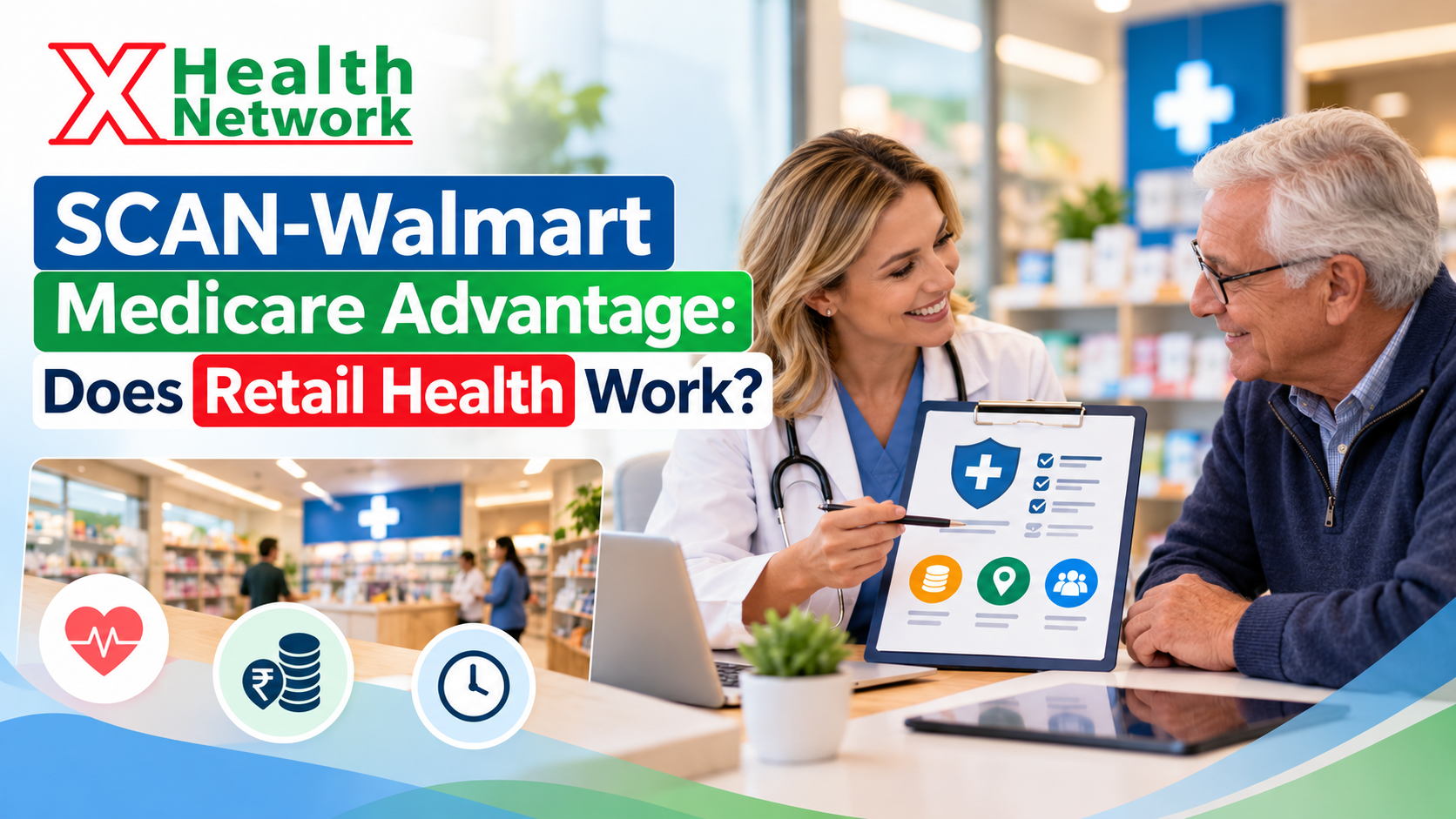
SCAN and Walmart's Medicare Advantage Partnership: Why Retail Health Keeps Trying and Whether It Can Finally Work
Introduction
The announcement that SCAN Health Plan and Walmart are collaborating on co-branded Medicare Advantage plans carries a weight that goes beyond the specific details of the deal. It arrives in the wake of a period of significant retail health contraction: Amazon shuttered its Amazon Care telehealth operations, Walgreens closed hundreds of its VillageMD clinic locations, and CVS has been restructuring its HealthHUB strategy after mixed results. The retail health sector looked, for a while, like a story of ambition running ahead of economic reality.
And yet here is another major retail player, the largest retailer on earth by revenue, partnering with a well-established Medicare Advantage plan to try again. The specific structure of the SCAN-Walmart partnership is different from previous retail health ventures, and understanding why it is structured differently, and whether those differences are sufficient to produce a more durable outcome, is a genuinely important question.
Understanding the History of Retail Health: What Went Wrong Before
To evaluate the SCAN-Walmart partnership fairly, it is essential to understand why previous retail health ventures struggled. The diagnoses vary somewhat by company and model, but several recurring themes stand out across the recent wave of failures.
Unit economics were consistently more difficult than projected. Clinic visits in retail settings turned out to generate less revenue per visit than traditional physician offices, partly because retail health clinics attracted a patient mix skewed toward lower-acuity, lower-complexity conditions. The conditions that brought patients to retail clinics, strep throat, minor injuries, prescription refills, did not generate sufficient revenue to cover the fixed cost of building out clinical space, recruiting clinical staff, and maintaining pharmacy and technology infrastructure.
Clinical integration was harder than anticipated. Retail health ventures that imagined their clinics functioning as primary care medical homes quickly discovered that patients who received care in a retail setting did not necessarily channel their specialist referrals, hospital admissions, or specialty pharmacy through the retail operator's preferred network. The ability to capture and coordinate the full episode of care, which is where genuine value-based model economics work, proved elusive in retail settings.
Amazon Care's specific failure reflected the additional challenge of entering healthcare without an established provider network, regulatory presence, or trusted clinical brand. Consumer willingness to see a doctor through an Amazon app turned out to be lower than market research had suggested, particularly for conditions that felt serious enough to warrant a physician with medical records access and clinical context.
Walgreens' VillageMD expansion struggled with a different problem: the capital intensity of building out co-located primary care clinics at scale was enormous, and the revenue timeline for value-based care models is long. When capital market conditions tightened and VillageMD's losses became apparent, Walgreens did not have the capital or strategic patience to continue the investment.
What Makes the SCAN-Walmart Model Different
The SCAN-Walmart partnership has a structural logic that differs from previous retail health failures in several meaningful ways, though whether those differences are sufficient to produce success remains to be seen.
SCAN Health Plan is not a startup. It is a well-established, not-for-profit Medicare Advantage plan based in California with decades of experience managing care for seniors in the Medicare population. SCAN has existing provider networks, clinical management infrastructure, regulatory expertise, and a track record of operating Medicare Advantage plans in complex markets. It brings to this partnership the clinical and regulatory foundation that previous retail health ventures were trying to build from scratch.
Walmart's contribution is different and complementary: physical footprint, consumer trust with specific demographics, data on consumer behavior and purchasing patterns, and an existing pharmacy operation that is already integrated into many seniors' healthcare routines. Walmart operates thousands of pharmacy locations nationwide, and many Medicare beneficiaries already use Walmart pharmacies for their prescription medications. A co-branded Medicare Advantage plan creates an opportunity to deepen that existing relationship rather than building a new one.
The co-branded plan model also implies a customer acquisition strategy that is different from building de novo clinics. Rather than investing capital in physical healthcare infrastructure, the SCAN-Walmart partnership appears focused on using Walmart's consumer reach and trusted retail brand to recruit Medicare-eligible seniors into SCAN's existing clinical management infrastructure. If successful, the economics look very different from the clinic-build model that consumed Walgreens' capital.
Recognizing the Structural Challenges That Remain
Acknowledging that the SCAN-Walmart model is structurally different from previous retail health failures does not mean it faces no significant challenges.
Geographic concentration is an important limitation. SCAN's established Medicare Advantage operations are concentrated primarily in California and a handful of other states. Walmart operates nationally. Building a credible Medicare Advantage plan in markets where SCAN does not have established provider networks and regulatory approvals is a time-consuming and capital-intensive process. The partnership may be more viable in California and neighboring markets than as a national rollout.
The Medicare Advantage market context described at the outset of this series is also relevant. Large insurers are cutting benefits and exiting counties under financial pressure, and CMS payment rates are under ongoing revision. A new Medicare Advantage plan entering markets with co-branded offerings faces a difficult competitive environment simultaneously from established plan retreats that reshape enrollee expectations and from regulatory scrutiny of plan benefit design.
Senior trust in retail brands for healthcare decisions, while higher for pharmacy services than for clinical care, is not automatically transferable to health plan enrollment decisions. Persuading a senior to choose a health plan partly based on a Walmart association requires a marketing and trust-building strategy that has not yet been demonstrated at scale in this specific context.
Diagnosis: Key Metrics to Watch for Early Signal
Whether the SCAN-Walmart partnership is succeeding or failing will become visible through several specific metrics in its first two to three years of operation.
Enrollment growth relative to projections will be the most basic indicator of whether the co-branded plan design is attracting the intended senior population. Medicare Advantage plan enrollment is reported to CMS and becomes publicly available, making tracking straightforward.
Medical loss ratio performance will indicate whether SCAN's clinical management infrastructure is successfully managing the costs of the enrolled population. New Medicare Advantage plans often face adverse selection dynamics as the highest-risk enrollees are the first to switch to new plans offering attractive benefits. How SCAN manages that risk will be critical.
Plan retention rates from year one to year two will indicate whether enrolled seniors are satisfied enough to remain in the plan rather than switching back to established alternatives during the next open enrollment period.
Treatment: Lessons the Retail Health Sector Should Absorb
The persistent experimentation with retail health models, despite repeated failures, reflects a genuine intuition that the American healthcare system's access and cost problems might be partially addressable through consumer-oriented retail models. That intuition is not wrong, but the implementation requirements are more demanding than most retail operators have acknowledged.
The conditions under which retail health can work appear to involve: an established clinical partner with real provider networks rather than a startup trying to build them; a consumer touchpoint that is already integrated into the target patient population's healthcare routine, preferably pharmacy; a focus on specific population segments with defined needs rather than general primary care; and patient economics that account for the long revenue cycle of value-based care models from the outset rather than projecting fee-for-service profitability.
Prevention: Building for the Long Term in Senior-Focused Retail Health
For the SCAN-Walmart partnership to become a durable model rather than another cautionary tale, it needs to demonstrate over the next three to five years that co-branded Medicare Advantage enrollment can be achieved at meaningful scale with financial performance that reflects the complexity of senior population health management, not optimistic actuarial projections.
Frequently Asked Questions
Q1: What exactly is the SCAN-Walmart Medicare Advantage partnership?
SCAN Health Plan, a not-for-profit Medicare Advantage insurer based in California, and Walmart are collaborating to offer co-branded Medicare Advantage plans. The partnership combines SCAN's clinical management capabilities and Medicare Advantage plan infrastructure with Walmart's retail reach and consumer brand recognition to recruit and serve Medicare-eligible seniors.
Q2: Why did previous retail health ventures like Amazon Care and Walgreens VillageMD fail?
Previous retail health ventures struggled with difficult unit economics because retail clinic visits skewed toward low-acuity, low-revenue conditions, problems integrating clinical care coordination at scale, the capital intensity of building physical clinic infrastructure, and long revenue timelines for value-based care models. Amazon's specific failure also reflected lower-than-expected consumer willingness to access clinical care through a retail technology platform.
Q3: Is the SCAN-Walmart model different enough from previous failures to succeed?
The SCAN-Walmart model has meaningful structural differences from previous failures, including an established clinical partner rather than a startup building networks, and a focus on co-branded insurance enrollment rather than physical clinic construction. Whether those differences are sufficient for commercial success depends on geographic expansion execution, Medicare Advantage market dynamics, and whether senior consumers choose a Walmart co-branded health plan in meaningful numbers.
Q4: How will we know if the SCAN-Walmart partnership is succeeding?
Key metrics include enrollment growth relative to projections, medical loss ratio performance indicating effective cost management, and year-over-year plan retention rates. Medicare Advantage enrollment data is publicly reported to CMS, making some of this tracking accessible to independent analysts.
Q5: What does the broader retail health contraction mean for healthcare access?
The contraction of retail health ventures that were intended to expand primary care access creates a coverage gap in communities where retail clinics had become established access points for routine care. It also suggests that sustainable healthcare access expansion requires models that are grounded in realistic clinical economics rather than retail-brand optimism, which may mean greater investment in community health centers, telehealth infrastructure, and value-based primary care models with longer time horizons.
Resources
- SCAN Health Plan: Official information on SCAN's Medicare Advantage programs, service areas, and clinical management approach
- Kaiser Family Foundation Medicare Advantage Research: Independent data on Medicare Advantage market trends, plan offerings, and enrollment patterns
- Modern Healthcare: Industry reporting on retail health partnerships, closures, and strategic developments
- JAMA Internal Medicine: Peer-reviewed research on retail clinic outcomes, patient populations, and healthcare system integration
- Centers for Medicare and Medicaid Services (CMS): Medicare Advantage plan data, enrollment reports, and regulatory information
Interlinking Keywords
SCAN Walmart Medicare Advantage, retail health partnership, retail health failure, Medicare Advantage 2027, co-branded health plan, Amazon Care closure, VillageMD Walgreens, senior healthcare retail, retail primary care model, Medicare Advantage enrollment
Last Reviewed By
Dr. Manthan Tripathi, xhealthnetwork Editorial and Medical Advisory Team on October 8, 2026.
Disclaimer
This article is intended for general informational purposes only and does not constitute financial, insurance, or medical advice. Individuals selecting Medicare Advantage plans should consult a licensed Medicare insurance counselor or their State Health Insurance Assistance Program (SHIP) advisor.
Spotted an error? Tell us — we publish corrections rather than editing quietly.
-
Oct 12